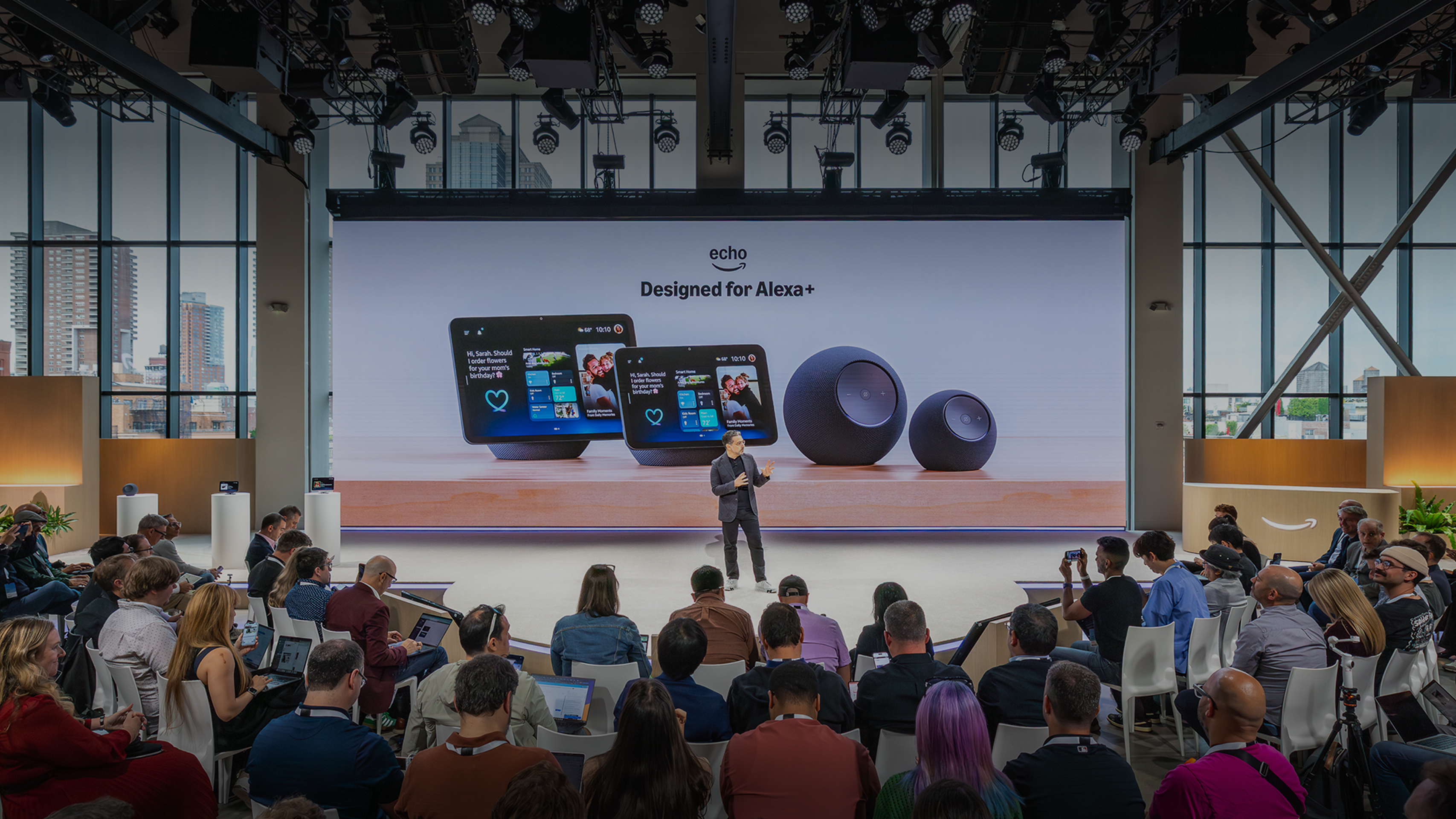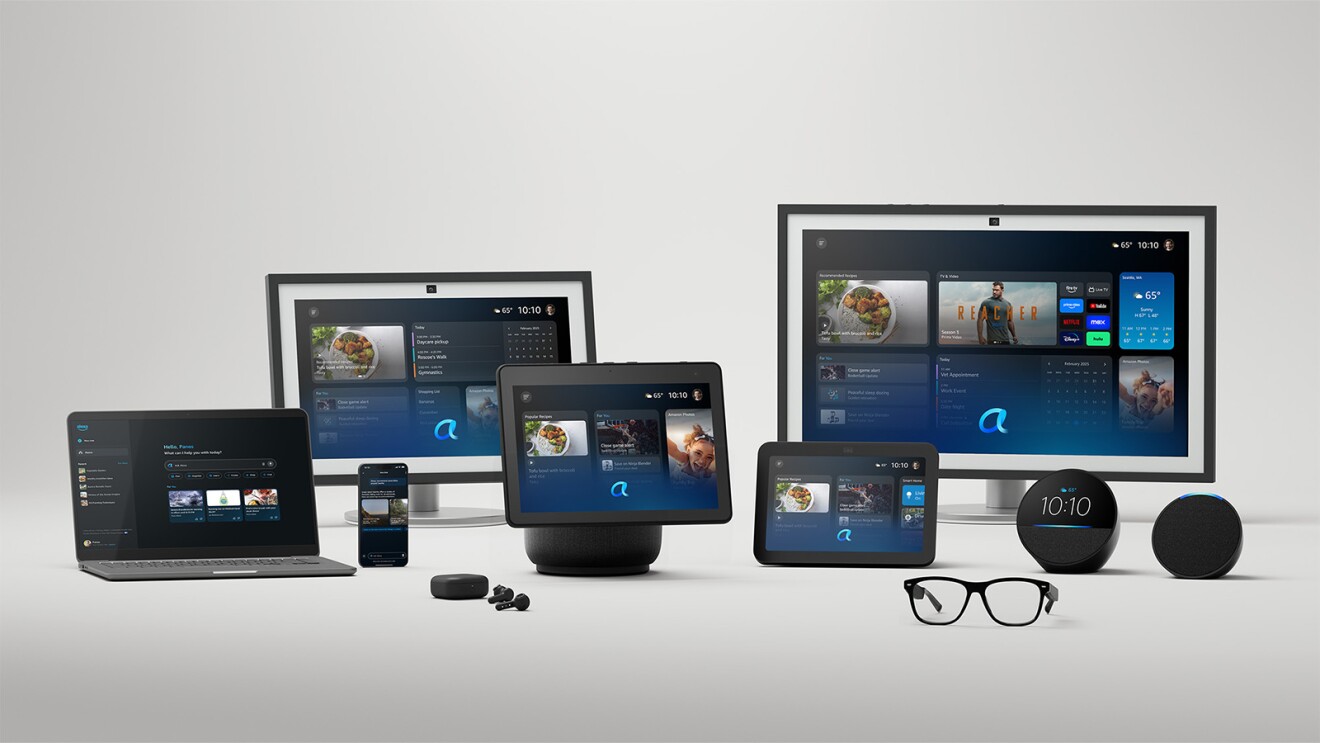
Next generation of Amazon's voice assistant, powered by generative AI for more natural, in-depth and personalized conversations that works everywhere - web, mobile and devices.
Designed Alexa+'s first-ever web experience from zero, defining the first-time user flow, the personalization engine, and the interest-based engine that saw 100k+ active users in its first month and roughly 1 million users as of July 2025. Alexa+ continues to roll out worldwide and is available on a massive base of 600M+ legacy and new Alexa-enabled devices.
Alexa spent over a decade constrained to simple, single-turn commands, only breaking into natural language conversations in mid-2022.
My earlier work on Alexa's NFL sports bot helped prove that shift was worth scaling since it was driving 50k+ organic sessions and had an 80% suggestion-pill engagement rate. This gave leadership the confidence to expand from sports to everything, and eventually launch Alexa+ in February 2025.
Web was the one surface that vision hadn't reached yet. Alexa only remembered context within a single session and couldn't hold multiple conversations at once. It offered limited functionality for end users.
Bringing Alexa+ to the browser meant designing an entirely new experience from first principles rather than extending an existing pattern.
To bring Alexa+ to the web with persistent memory, personalization, and cross-device, turning a single-purpose voice assistant into a cross-platform, agentic AI that remembers who you are wherever you find it.
As the design lead for 2 core areas - Personalization and First-Time User Experience, I owned its interaction design and information architecture for Alexa+ on web.
I started from the user pain points: lack of web presence, memory that reset with every session and no ability to run parallel conversations
For personalization, my work involved mapping both explicit signals (added interests, interest settings, direct feedback like "don't show me politics") and implicit signals (clicks, shares, chat conversations), then iterating through three placements for surfacing what Alexa had learned. I finally landed on embedding it directly within the chat itself rather than a separate panel or right-rail module. I built out the underlying interest-entity model and a scalable interest-pill component system so the same personalization logic could support follow states, notifications, and unsupported actions consistently as the surface area grew.
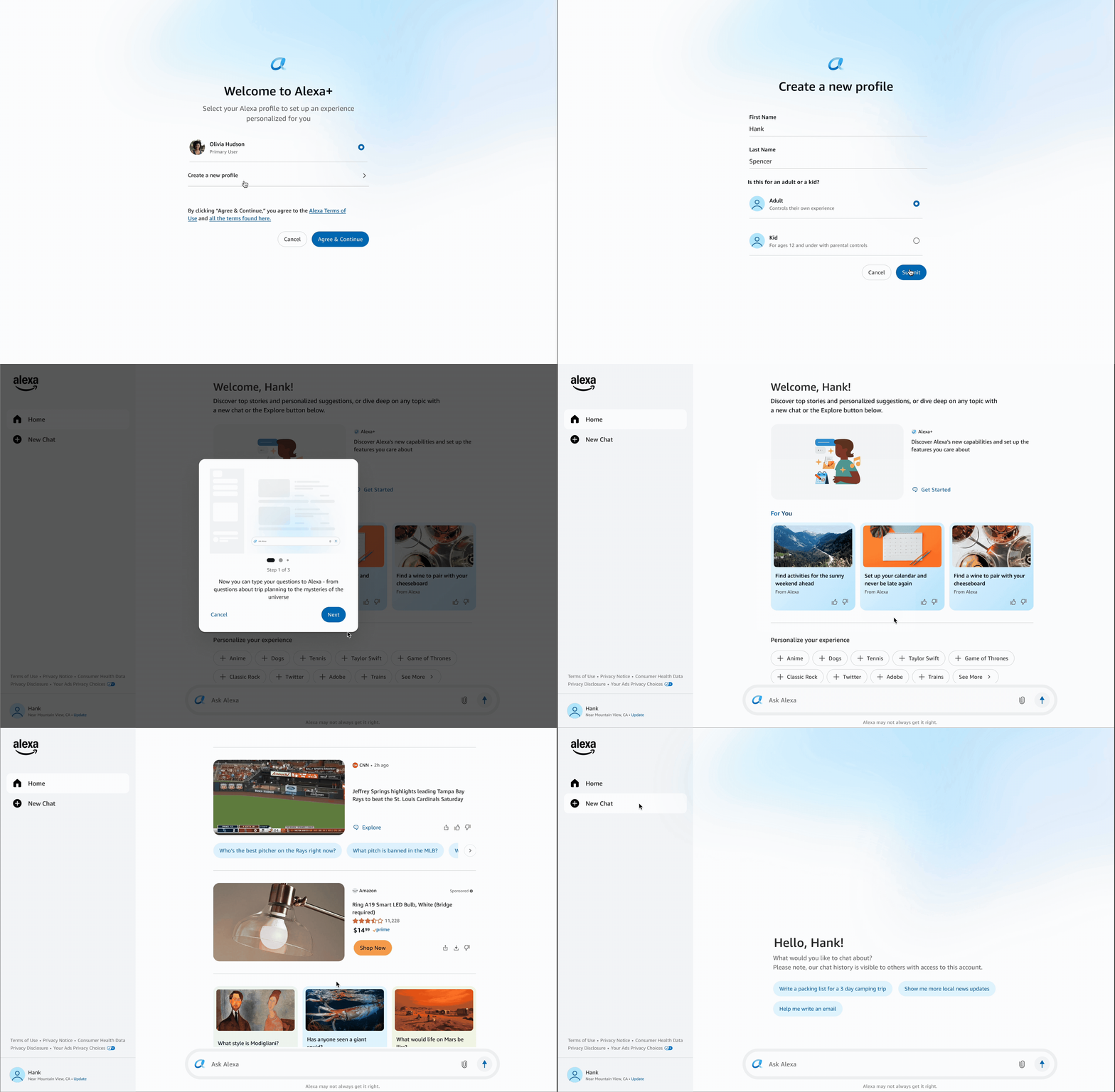
For first-time user experience (FTUX), I built the entire user flows for different user types and prototyped two directions, a modal walkthrough and a standalone page. We navigated towards the modal design because it turned onboarding into immediate, visible value instead of a dedicated page.
Highly personalized dedicated homepage that tailors users' experience with Alexa+ - Mixes sponsored placements, editorial suggestions, and reactive follow-ups ("Because you asked me about this topic") with location-aware and behavior-based content like local news and restaurant bookings
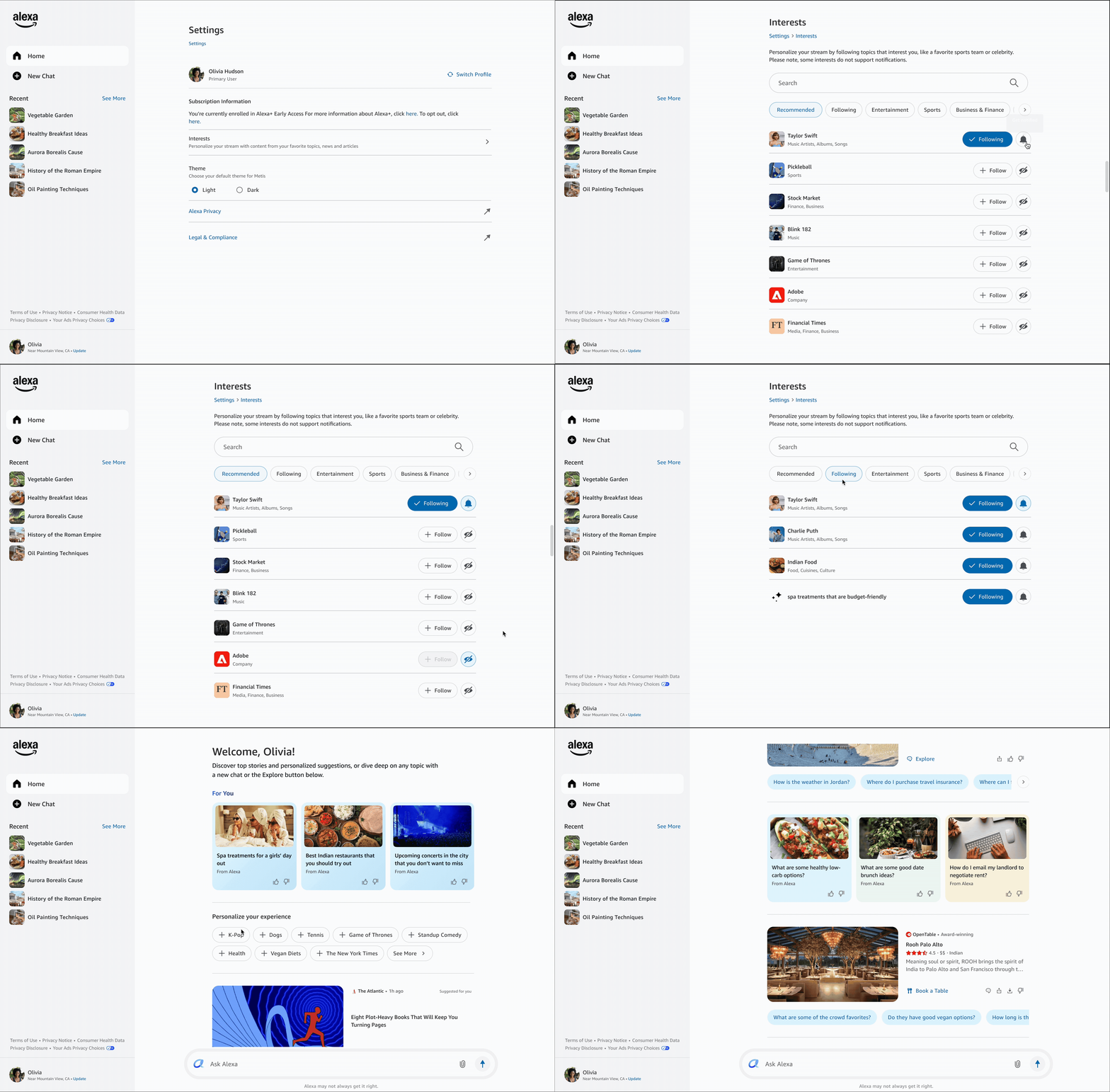
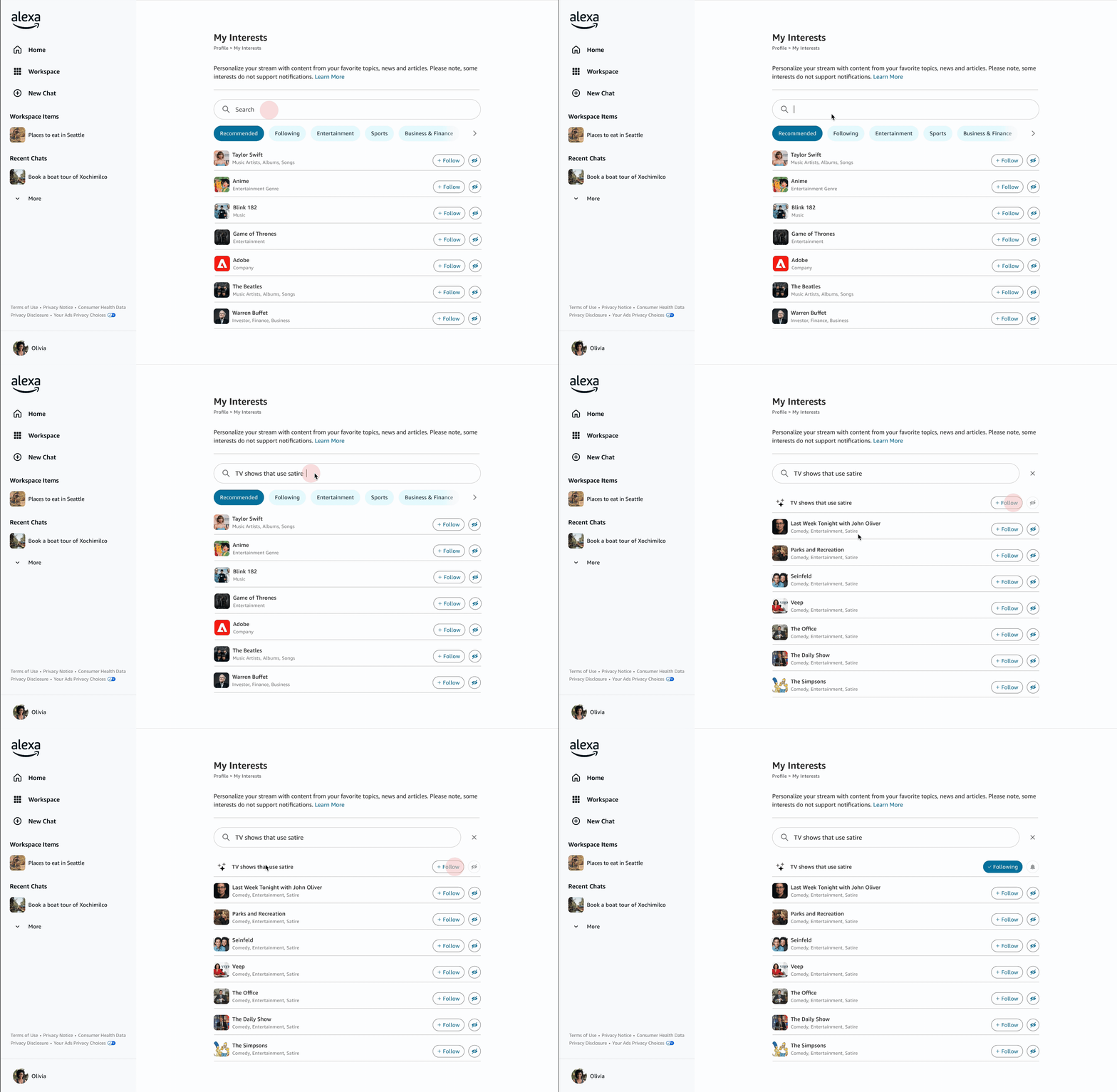
Ability to add interests in plain language ("TV shows that use satire") instead of picking specific topics ("John Oliver", "The Simpsons" etc)
Multiple profiles and dedicated user onboarding so that users can jump right in and start chatting with Alexa
The product was launched for early-access in February 2025 in the US. It proved an earlier concept (the NFL sports bot) that generated 50k+ sessions through organic discovery, an 80% suggestion-pill engagement rate, and roughly 5 turns per session before Alexa+ ever shipped.
active users during the first month of early access
users as of July 2025
Amazon CEO Andy Jassy publicly marked the Alexa+ launch on LinkedIn. The consumer launch itself was announced on stage by Amazon Senior VP of Devices Panos Panay in February 2025.